Fleet Management Dashboard
An IoT-enabled fleet management system with live GPS tracking on complex maps, built at MintyFi.
- Role
- Front-end developer, MintyFi
- Period
- Feb 2023 — Apr 2025
- Stack
- React, TypeScript, Redux Toolkit, Mapbox, Google Maps API, WebSocket, Chart.js
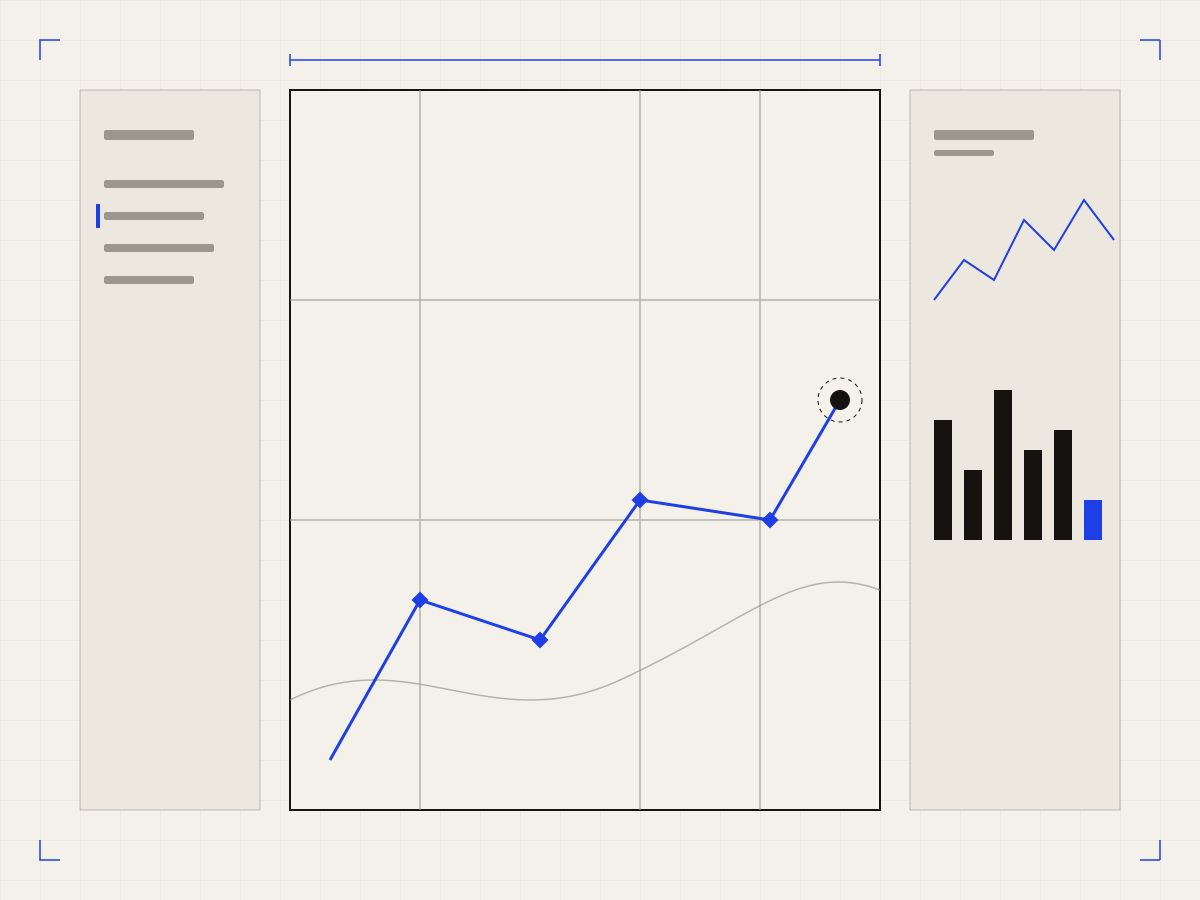
Sub-second position updates and smooth rendering of data-heavy views on low-end devices.
Brief
Operators needed to see every vehicle on a map in real time, with route history, analytics and reporting, and it had to run on the low-end hardware already in the field.
Rendering under load
The data-heavy components were restructured around a normalized store and throttled updates, which significantly improved performance on low-end devices while keeping position updates under a second.
Maps
Mapbox and Google Maps integrations handle live GPS tracking and route optimization, with dashboard analytics rendered through interactive charts.
- <1 sposition update latency
- 2map providers integrated
- 26months in production
- 01IoT devicesVehicles report position and telemetry.
- 02WebSocket streamLive events arrive many times per second.
- 03Normalized storeRedux Toolkit entities, updates throttled per frame.
- 04Map and chartsMapbox and Google Maps markers, Chart.js analytics.
Interface
A map-first dashboard with route history, live markers and analytics charts that stay readable at fleet scale.
State
A normalized vehicle store in Redux Toolkit with throttled updates, so hundreds of moving markers do not trigger hundreds of re-renders.
Data
IoT telemetry over WebSocket for live positions, REST endpoints for history and reporting.